The primary security measure for your home electrical system begins with circuit breakers which serve as the initial defense mechanism. The essential devices protect your home through electrical overload prevention which helps avoid potential fire hazards while providing safe and dependable electricity distribution throughout your home. The existence of multiple circuit breaker sizes exists because different sizes function to meet specific operational demands. The various types of circuit breakers need to be learned because they establish essential conditions which need to be fulfilled for safe home operation and correct electrical device functioning. This article will show you the breaker size which most people use and its suitable uses while explaining why it matters to choose the proper size for your specific requirements. The guide serves its purpose to educate all homeowners which includes DIY enthusiasts and learners who want to understand how circuit breakers operate to help them make their decisions.
Introduction to Circuit Breakers
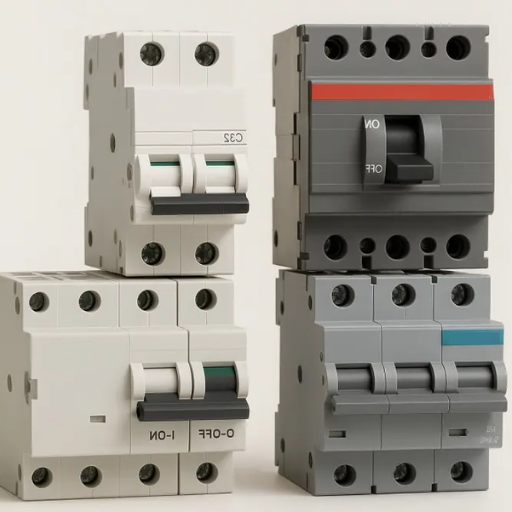
Circuit breakers protect electrical systems from overcurrent and short circuit damage because they function as vital system components. The system automatically stops electricity flow when it detects faults which helps prevent both overheating and fire hazards while protecting appliances from harm. Circuit breakers there offer valuable advantages because users can reset them after tripping but traditional fuses require replacement when they stop working. They serve essential security functions because they ensure safe electrical power distribution throughout residential areas and commercial properties.
The Importance of Correct Breaker Size
The selection of proper breaker size creates essential requirements which ensure both secure electrical operations and uninterrupted system functions. The use of an incorrectly sized circuit breaker results in dangerous consequences which include equipment destruction and electrical fires and the waste of power. The following list presents essential elements which demonstrate the significance of selecting the appropriate circuit breaker size.
Preventing Overloading
A correctly sized breaker prevents electrical circuits from becoming overloaded according to its design specifications. The circuit requires a breaker which can handle its 20 amp capacity because it operates at that level. A 15 amp breaker will cause the circuit to shut down repeatedly while a 30 amp breaker will permit excessive current which will result in equipment overheating.
Ensuring Equipment Safety
Electrical appliances and machinery operate safely when current levels remain within their designated limits. A breaker that is too large might fail to protect these devices in the event of a fault, leading to damage or total failure.
Adhering to Electrical Codes
Building codes and electrical standards including National Electrical Code NEC require breaker sizing to combine wire gauge measurement with circuit load calculation. The mandatory compliance requirement guarantees maximum safety protection for electrical systems.
Minimizing Fire Hazards
The use of incorrectly sized breakers leads to overcurrent conditions which generate excessive heat in electrical wires. The correct breaker size will control dangerous situations through its mechanism which prevents excessive current flow.
Maintaining System Efficiency
The system experiences power interruptions and energy loss because of unnecessary circuit breaker shutdowns which result from improper breaker size. The system will run continuously without interruptions when correct size is chosen.
Professional standards define proper breaker size through calculations which use load requirements and wiring capabilities and safety standards. The implementation of these principles through regular inspections will create a safe environment for people and electrical systems.
Electrical Code Compliance and Safety
Electrical safety requirements need to be followed through strict compliance with all established safety standards and operational guidelines. The following are five key elements to consider:
Proper Wiring Standards
The National Electrical Code (NEC) and all local regulations need to be followed for every installation plus maintenance task. The correct wire gauge plus materials and methods must be used for every application according to this requirement.
Grounding Requirements
The system needs proper grounding because it protects against electric shocks and equipment damage. The grounding systems must meet code requirements to achieve safe electrical discharge of excess voltage.
Breaker and Fuse Sizing
Electric breakers and fuses require proper sizing based on both the load requirements and the design specs of the circuit. The requirements for overcurrent protection devices need to match calculated values to prevent both overheating and fire risks.
Inspection and Maintenance
Electrical systems need regular inspection and maintenance because it is required for code compliance. This process helps to find potential risks, including loose connections and worn-out components, before those issues result in failures or accidents.
Labeling and Documentation
Safety requirements and compliance needs circuit and panel and electrical component labeling through clear identification. Accurate documentation ensures that future inspection, repair, or expansion work can be performed efficiently and safely.
The elements create safe electrical systems which maintain efficient operation while meeting all required standards according to established guidelines.
Overview of Standard Circuit Breaker Sizes
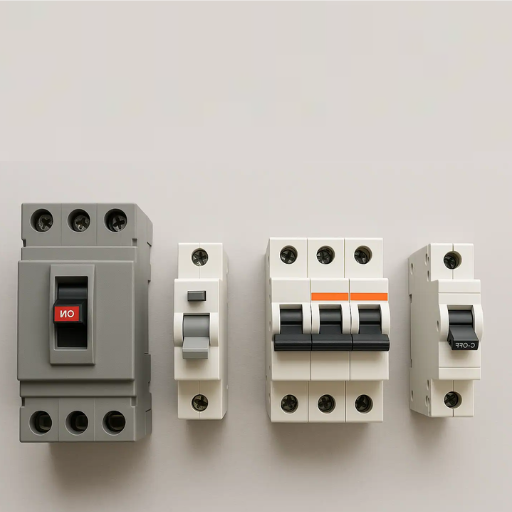
Standard circuit breaker sizes function as essential elements of electrical systems which offer protection against overcurrents to protect equipment from damage caused by excessive electrical flow. Circuit breakers come in a range of sizes to accommodate various requirements from residential settings to industrial operations. The system needs these components to function according to their specified current rating system which measures power output through amperes (A) and operates their assigned roles in electrical systems.
Common Circuit Breaker Sizes
- Residential Circuit Breakers
Typical household applications require circuit breakers that operate between 15 and 50 amps.
The general lighting and outlet circuits commonly use 15A and 20A breakers.
Water heaters and air conditioners use 30A breakers to power their operations.
The circuits that power stoves and large HVAC systems typically use 40A to 50A breakers.
- Commercial and Industrial Circuit Breakers
Commercial and industrial environments require circuit breakers with high capacity needs. The facility size and power requirements determine the maximum capacity of these breakers which can reach up to 1200 amps and beyond.
Small to medium-sized commercial buildings use 100A to 200A breakers as their standard equipment.
Large industrial systems and power distribution panels require 600A to 1200A breakers as their appropriate protection solution.
The equipment
Low-voltage circuit breakers function at electrical voltages which stay below 1000 volts. This design allows the equipment to be used in both homes and commercial buildings.
Electrical utilities use medium-voltage breakers which operate at voltages that reach 72000 volts. The equipment is designed for operation in utility-grade electrical systems.
Additional Data from Industry Standards
The National Electrical Code (NEC) together with international standards requires correct circuit breaker sizing because it protects people and improves system performance. The NEC recommends that operators choose a breaker size which equals 125% of their continuous load to achieve successful operation throughout the equipment’s lifespan. Smart circuit breakers which combine advanced materials with technological progress enable users to monitor their systems in real time and operate them from remote locations.
Electrical professionals use standard size knowledge because it helps them create and operate electrical systems that fulfill both operational needs and safety standards.
15A Circuit Breakers
In residential buildings and light commercial spaces, 15A circuit breakers serve as the most common type of circuit breaker. These breakers protect electrical circuits which supply power to general-purpose outlets and lighting fixtures and small devices. According to most building codes, 15A breakers are often paired with 14-gauge wire and are ideal for handling loads up to 80% of their rated capacity, as per the National Electrical Code (NEC). The maximum secure permanent current load which a system can handle equals 12 amps.
Modern 15A circuit breakers come with various features, including thermal-magnetic technology, which combines thermal sensing for overload protection and magnetic sensing for short circuit detection. The devices work with standard 120V single-phase electrical systems which are typically used in residential buildings. The advanced 15A breakers come with intelligent technology which enables users to track their energy consumption from remote locations while using wireless connections to control their circuit operations, thus improving energy performance.
The selection process for a 15A circuit breaker requires an assessment of all electrical equipment which needs power from the breaker. The 15A circuit provides sufficient power to operate microwaves toasters and other small appliances but using multiple high-demand devices on a single circuit will result in constant circuit interruptions. Electrical systems require safe operation which depends on following both manufacturer guidelines and building regulations.
20A Circuit Breakers
20A breakers protect circuits which can carry higher electrical loads than 15A circuits making these circuits suitable for powering both high-demand appliances and all areas of a home or commercial building. A 20A breaker can safely deliver up to 2,400 watts on a standard 120-volt circuit. The breakers which serve these areas function in kitchens and laundry rooms and garages because these spaces need power for their refrigerators and dishwashers and heavy-duty power tools and washing machines.
Standard electrical codes require 20A circuits to use 12-gauge wire or thicker wire for safe energy transmission because this wire size prevents overheating. The circuit capacity must be protected from being exceeded. The circuit capacity will be exceeded when two high-powered devices which include a microwave and a toaster oven are used at the same time.
Through recent circuit breaker technological advancements, smart 20A breakers were developed which provide users with remote monitoring and control functions through mobile applications. The breakers track energy consumption, detect faults with higher precision, and send immediate alerts to homeowners when a breaker trips. The combination of National Electrical Code (NEC) standards compliance with advanced safety features results in better security measures which help save energy and improve user experience.
30A Circuit Breakers
The 30A circuit breakers function as essential elements of electrical systems which power residential buildings and commercial establishments and industrial facilities that require circuits with greater current capacity. The breakers are designed to protect large appliances which include air conditioners and water heaters and electric dryers. The system can handle a continuous power draw of 30 amps while providing protection against both overcurrents and short circuits.
Modern 30A breakers comply with updated safety standards which require breakers to meet NEC specifications. Many options now include smart features which match their 20A counterparts and provide real-time energy monitoring with fault notifications through integrated mobile applications. According to recent industry data the global market for smart circuit breakers will grow at a compound annual growth rate of 7.8% between 2023 and 2030 because more people are adopting these advanced technologies.
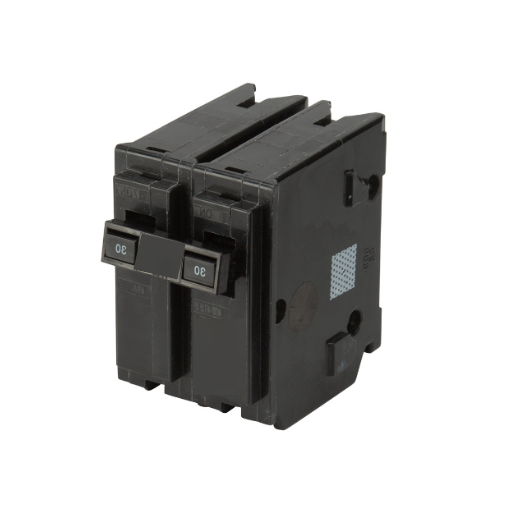
The 30A breaker specifications show different requirements except that standard models include both single-pole and double-pole designs. The 120V applications of Single-pole 30A breakers need to use 30A breakers while their double-pole variants work with 240V systems to enable various electrical applications. Users must check that circuit breaker specifications and panel requirements and connected load specifications match security needs and performance standards of their system.
50A Circuit Breakers
The 50A circuit breakers create an industry standard which electrical systems need to operate their high current requirements for electric dryers and ovens and electric vehicle chargers. The breakers serve their main purpose in residential and commercial and industrial environments because they handle substantial electrical loads with their built-in capabilities. The system includes two components which contain specifications and features. The system specifies 50A circuit breakers to operate at 120/240V single-phase or 240V systems which power both large appliances and heavy-duty equipment. The system offers two breaker types The system requires single-pole breakers to handle 120V power for small devices which need high current The system requires double-pole breakers to operate 240V power because it supports larger systems and heavy-duty equipment The system requires interrupting ratings which commonly range from 10,000 to 22,000 amperes interrupting capacity AIC to provide protection against sudden power surges or circuit faults The system uses thermal mechanisms to protect against overloads and short circuits and handles these problems through its two trip mechanisms.
Square D and Siemens and Eaton provide 50A circuit breakers which have obtained UL certification and fulfill National Electrical Code (NEC) standards. The Square D QO250 Voltage rating 240V shows an example of this product. The product works with QO load centers. The product has a compact and durable design which meets the requirements of residential panel applications. The Siemens Q250 product features a double-pole design which operates at 50A. The system provides essential safety protection through its interrupting performance capabilities. The Eaton BR250 system enables multiple mounting options for BR panel systems. The system provides thermal magnetic tripping which enables better system protection. All kitchen equipment including electric ranges and double ovens can use the system in its current state. Central air conditioning units operate as essential components of HVAC systems. Level 2 EV chargers act as electric vehicle charging stations for their users. The system uses subpanels to support both residential and small commercial applications. The 50A circuit breaker must match system requirements and load specifications and manufacturer guidelines. The electrical system needs a licensed electrician for both proper installation and safety maintenance which ensures compliance with local regulations.
Wire Gauges Corresponding to Breaker Sizes
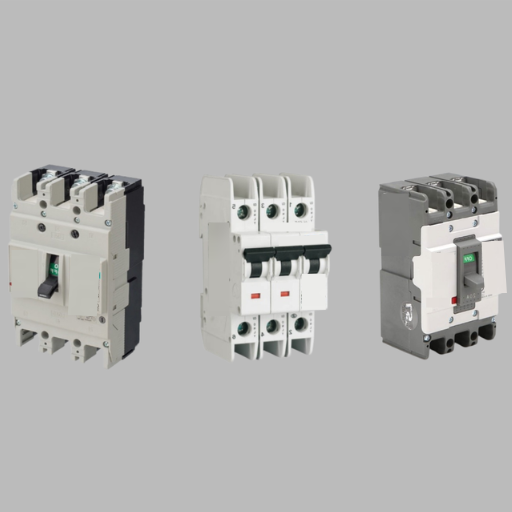
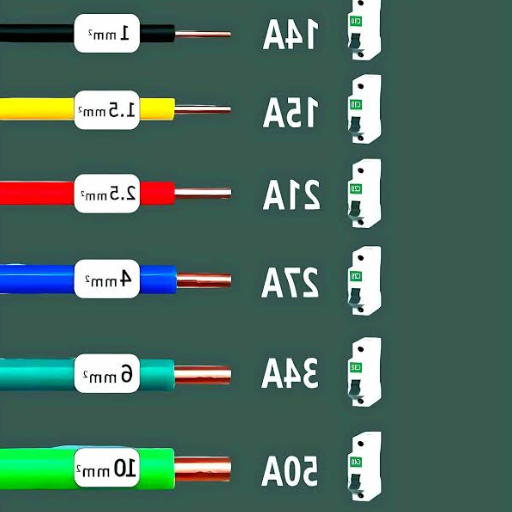
The appropriate wire gauge must be selected according to the circuit breaker amperage because this requirement prevents overheating and protects equipment safety while meeting electrical code standards. The table below presents five standard breaker sizes together with their matched wire gauge specifications.
15-Amp Breaker
- Wire Gauge: 14 AWG (minimum)
- The system operates standard electrical systems which provide power to lighting fixtures and essential equipment.
20-Amp Breaker
- Wire Gauge: 12 AWG (minimum)
- The system operates standard electrical systems which provide power to lighting fixtures and essential equipment.
30-Amp Breaker
- Wire Gauge: 10 AWG (minimum)
- The system operates heavy-duty machinery which includes water heating systems and central air conditioning equipment.
40-Amp Breaker
- Wire Gauge: 8 AWG (minimum)
- The system provides power to electric ranges and ovens together with small heating and cooling devices.
50-Amp Breaker
- Wire Gauge: 6 AWG (minimum)
- The system handles power distribution for large electric ranges and Level 2 EV chargers and subpanels.
You must include local electrical codes together with certified electrician assistance to achieve proper installation and safety standards. The practice of using wire gauges which do not meet the specified standards for a breaker size presents dangerous safety hazards.
Understanding Wire Gauge Ratings
The choice of electrical system wiring needs to match the wire gauge ratings which serve as the essential requirement for selecting proper wiring. The American Wire Gauge (AWG) system serves as the United States standard for measuring wire diameter. A smaller AWG number indicates a thicker wire which can handle more current while a larger AWG number signifies a thinner wire suitable for lower current levels.
The following section presents wire gauge ratings together with their matching capacity values.
- 14 AWG: This wire size supports circuits that draw up to 15 amps which makes it suitable for general household lighting and receptacle wiring.
- 12 AWG: This wire size supports circuits that draw up to 20 amps which commonly appears in kitchen and bathroom and outdoor area outlets.
- 10 AWG: This wire size supports circuits that draw up to 30 amps which people use to connect appliances such as water heaters and small air conditioning units.
- 8 AWG: This wire size supports 40 amp circuits which people use to connect larger appliances such as electric dryers and smaller HVAC units.
- 6 AWG: This wire size supports 55 amp circuits which people use to connect large appliances and subpanels.
- 4 AWG and larger (e.g., 2 AWG, 1/0 AWG): This wire size supports heavy-duty applications which include service panels and large subpanels and Level 2 EV chargers.
Key Considerations in Choosing Wire Size
- Current Load: Always select a wire that can handle the highest circuit amperage which includes provisions for future system expansion.
- Voltage Drop: Voltage experiences substantial reduction for extended wire distances because thicker wires are needed to counteract this voltage loss.
- Temperature Rating: The wire insulation must have a temperature rating that exceeds the highest circuit operating temperature.
- Safety and Compliance: National Electrical Code NEC compliance establishes essential safety measures which protect against fire hazards and overheating problems. The use of undersized wires creates severe safety hazards.
Voltage Drop Reference Example
When dealing with longer wire runs, the following table can serve as an example reference for voltage drop:
|
Wire Gauge |
Distance (50 ft) |
Distance (100 ft) |
Distance (200 ft) |
|---|---|---|---|
|
14 AWG |
15 Amps |
Possible Drop |
Significant Drop |
|
12 AWG |
___< Fill Path Safe |
Wire Gauge for 15A Breakers
The selection process of wire gauge needs to follow proper electrical standards when applying them to 15A circuit breaker systems because these standards protect people and maintain system performance. The National Electrical Code (NEC) defines 14 AWG (American Wire Gauge) copper wire as the minimum wire size which should be used for 15-amp circuits. The use of 12 AWG wire systems becomes necessary to control voltage drop which occurs during long wire runs.
Factors to Consider for Wire Gauge Selection:
Distance of the Wire Run:
The 14 AWG wire size functions properly for standard household wiring which uses short wire lengths that do not exceed 50 feet. The 12 AWG wire size should be used for wire lengths which exceed 50 feet because it effectively reduces voltage drop while ensuring proper current transmission. Copper wires are the preferred choice because they deliver better conductivity and dependable performance. Aluminum wires cost less but need higher wire sizes because 12 AWG aluminum wire needs to be used for a 15A breaker system.
Voltage Drop Consideration:
Standard efficiency requires that voltage drop should remain below 3 percent. The 120-volt circuit requires that voltage losses should not exceed 3.6 volts.
Wire Gauge and Distance Table (15A Circuit)
|
Wire Gauge |
Maximum Distance (Up to 3% Voltage Drop at 120V) |
|---|---|
|
14 AWG Copper Wire |
50 feet |
|
12 AWG Copper Wire |
100 feet |
|
10 AWG Copper Wire |
200 feet |
The table demonstrates that higher gauge wires which have lower AWG numbers perform better for applications that require longer distance connections. The 15A circuit requires standard residential installation to use 14 or 12 AWG copper wire while special situations with high load demand and extended wire lengths necessitate different requirements. The planning of electrical work requires complete compliance with local codes.
Wire Gauge for 20A Breakers
The selection of wire gauge needs to adhere to safety standards and electrical codes when designing an electrical circuit that uses a 20A breaker. According to the National Electric Code (NEC) the standard wire size for a 20A circuit is 12 AWG copper wire. However, there are specific considerations that may affect your choice:
Distance of the Circuit
Voltage drop becomes a concern when the distance from power source to device exceeds 50 feet. To reduce resistance and prevent voltage loss, it is necessary to upgrade to a thicker wire which should be 10 AWG copper wire.
Material of the Conductor
The most commonly used wire material in the industry is copper because it provides superior electrical conductivity. Aluminum wires offer a cost-effective solution but require larger dimensions (10 AWG aluminum wire for a 20A breaker) to achieve safe amperage capacity.
High Load Applications
The use of 10 AWG copper wire provides both safety benefits and efficiency improvements for equipment that requires high starting currents.
|
Wire Type |
Gauge (AWG) |
Maximum Distance (Approx.) |
|---|---|---|
|
Copper Wire |
12 AWG |
Up to 50 feet |
|
Copper Wire |
10 AWG |
Over 50 feet |
|
Aluminum Wire |
10 AWG |
Up to 35 feet |
|
Aluminum Wire |
8 AWG |
Over 35 feet |
Important Notes
Electrical requirements should be verified through local electrical codes and regulations because requirements differ between different areas.
A licensed electrician should be consulted for critical applications because theywill ensure proper wire sizing and breaker selection.
The use of GFCI (Ground Fault Circuit Interrupter) breakers may also be required for specific 20A circuits which include kitchen and bathroom and outdoor spaces.
The safe and efficient electrical installation process requires you to select the correct wire gauge while taking into account your circuit’s specific requirements.
Wire Gauge for 30A and 50A Breakers
The wire gauge selection process for 30A and 50A circuit breakers needs assessment of electrical current load together with wire material selection between copper and aluminum and run distance determination. The correct wire thickness choice establishes safety protection from dangerous conditions through heat control and electrical danger prevention.
Wire Gauge for 30A Breakers
The standard wire gauge for 30A circuit breakers requires 10 AWG (American Wire Gauge) copper wire as the recommended wire size. The higher conductivity of copper makes it the better transmission method for short distances between two points. Aluminum wire needs an 8 AWG size because its conductivity falls below that of copper.
The assessment process requires distance measurement as a critical factor. Wire runs exceeding 100 feet require wire gauge upsizing as a solution to prevent voltage loss. The 30A circuit breaker requires 8 AWG copper wire and 6 AWG aluminum wire for runs exceeding 100 feet.
Wire Gauge for 50A Breakers
The standard for 50A circuit breakers requires 6 AWG copper wire as the primary wire choice while 4 AWG aluminum wire serves as an acceptable substitute. The wire design enables safe operation at high current capacity because it prevents the wire from reaching dangerous temperatures.
The 30A circuits require wire gauge adjustments when run distances exceed 100 feet. Voltage drops on 50A circuits can be controlled by using 4 AWG copper wire or 2 AWG aluminum wire for extended circuit distances.
Additional Considerations
- Local Electrical Codes – The building codes which apply to this project must be followed because these codes establish minimum requirements for electric work which includes specifications about wire thickness used in installation.
- Voltage Drop – The electrical circuit experiences decreased efficiency when voltage drop occurs at longer distances. A voltage drop calculator should be used or a licensed electrician should be consulted to assess the need for upsizing requirements.
- Wire Material – Copper wires provide better conductivity and lasting strength which makes them the most common choice while aluminum wires offer lower weight and cost benefits but require special handling procedures that include using anti-oxidant compounds during installation.
The proper wire gauge and code requirements established for 30A and 50A circuits will help you maintain safe and operational electrical systems which provide dependable power to your home or project. All installation work needs a licensed electrician present because they will make sure that local regulations and standards are properly followed.
Common Applications of Circuit Breaker Sizes
15-Amp Circuits
- The circuit system serves as the main electrical framework which provides power to residential lighting systems and general electrical outlets throughout the house.
- The system can power standard fixtures together with small appliances and low-power devices.
20-Amp Circuits
- The electrical system operates in three areas which include kitchens bathrooms and laundry rooms.
- The system can power multiple high-energy appliances which include microwave ovens and toasters and hair dryers.
30-Amp Circuits
- The system uses dedicated circuits which deliver power to air conditioning systems and water heating systems and recreational vehicle connections.
- The system operates dedicated power circuits which deliver electricity to air conditioning systems and water heating systems and RV power outlets.
- The system provides sufficient power capacity for equipment which requires mid-range power consumption needs.
50-Amp Circuits
- The system functions as the main electric supply which powers electric cooking appliances and HVAC equipment.
- The system operates in both residential buildings and commercial spaces which need to handle heavier electricity demands.
100-Amp Circuits
- The system functions as the electrical system for both large homes and small business establishments.
- The system works well for environments which require high electricity because it can support multiple HVAC systems together with large machines and simultaneous equipment use.
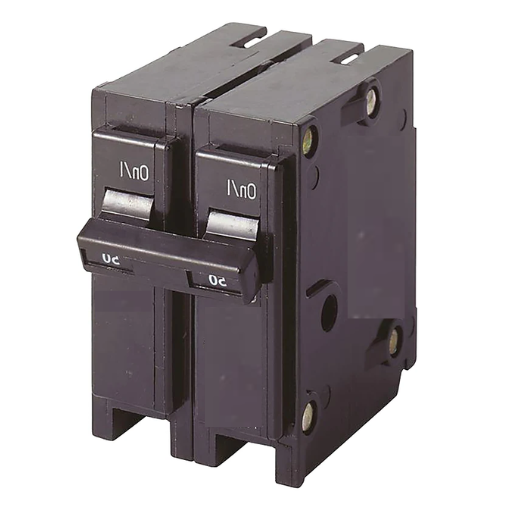
The circuit breaker sizes provide different electrical solutions which ensure safe operations through correct application. The code requirements need verification which should be done through consultation with a certified electrician for installation purposes.
Lighting Circuits and 15A Breakers
Homeowners typically select 15-amp circuit breakers as the standard option for their lighting circuits because these breakers work with most common residential light fixtures. The breakers have capacity to carry electrical currents which reach 15 amps but this limit results in approximately 1,800 watts at 120 volts. The wattage limit allows users to power light fixtures ceiling fans and small electrical equipment such as table lamps.
The National Electrical Code (NEC) recommends that circuits should operate at 80% of their maximum capacity during continuous load to achieve both safety and efficiency. A 15-amp breaker can support continuous loads that reach 1,440 watts. The circuit can support 24 light fixtures as long as each fixture uses 60 watts and no other devices connect to that 15-amp circuit.
The minimum wire size for a 15-amp breaker requires 14-gauge wire to meet safety standards and regulatory requirements, which lighting circuits commonly use. Dimming systems and LED lights, which consume less power than traditional incandescent bulbs, are becoming increasingly popular today. The system enables decreased circuit load, which results in energy savings and extended operational life for the lighting system.
The design process for a lighting circuit requires accurate load estimation together with planning for future system expansions. The system performance and safety will improve through collaboration with a licensed electrician and following the requirements of local building codes.
Heavy Appliances and 30A/50A Breakers
Heavy appliances which include electric stoves and dryers and water heaters and HVAC systems require dedicated circuits that use 30A or 50A breakers to support their increased power needs. The breakers function to manage the high electrical current which these appliances demand because their operation requires both optimal performance and safe operation.
Electrical standards dictate that, for electric dryers and smaller water heaters, a 30-amp breaker serves as the standard breaker which supports devices that need between 5,000 and 7,500 watts. The power requirements of electric ranges and high-capacity HVAC systems need a 50-amp breaker because their actual power consumption depends on the specific equipment model which needs between 12,000 and 15,000 watts. The selection process for breaker size must consider both the electrical requirements of the appliance and the capacity of the electrical wiring because choosing an undersized breaker will result in equipment overheating which creates a fire hazard but selecting an oversized breaker will not activate during faults thus causing equipment damage.
The National Electrical Code (NEC) requires these circuits to operate with thick wires through standard practice which implements 10-gauge wiring for 30A circuits and 6-gauge wiring for 50A circuits. Homeowners need smart breaker systems and monitoring technologies because these tools provide immediate power consumption information which helps them manage heavy appliances and create safer homes while reducing energy use.
Homeowners need to hire certified electricians for their heavy appliance circuit installations and upgrades so they can achieve correct load distribution while meeting all electrical requirements and local building code standards.
Using 20A Breakers for General Use
Electricians use 20A breakers as the basic circuit protection devices for residential wiring systems which deliver power to typical household appliances. The breakers create multiple options because they permit users to power equipment which needs more electricity than standard 15A circuits can deliver. The next section provides vital data which demonstrates how 20A breakers get used in multiple situations.
Kitchen Outlets
Modern kitchens require 20A circuits because their appliances need power for their blenders toasters and coffee makers. The National Electrical Code (NEC) guidelines recommend 20A circuits as the required standard for countertop outlets because these outlets must handle higher electrical loads according to their design.
Bathroom Circuits
Bathrooms contain high-energy appliances which include hairdryers and electric razors. Electric appliance use requires a dedicated 20A circuit which protects against overloads while maintaining safe operations.
Garage or Workshop Equipment
The extra electrical capacity that a 20A breaker provides allows rooms and garages to function properly when customers use power drills and air compressors and saws. The tools require greater electrical power to function during their operational phases.
Laundry Areas
Washing machines require a 20A breaker because this breaker protects the system from power surges that occur during washing cycles. This method protects against unexpected electrical interruptions which leads to smoother system performance.
Small to Medium Space Heaters
Space heaters which people can use in both portable and stationary modes need a 20A circuit to operate in spaces ranging from small to medium size. The system prevents wire overheating which allows the device to function in a safe manner.
20A breakers handle high electrical loads which makes them essential for maintaining safe operations in all areas of residential spaces. A licensed electrician must inspect your house to recommend which 20A breakers work with your electrical system and current building regulations.
References
- Lab-Scale Circuit Breaker Module for Power System Laboratories
-
- Source: California Polytechnic State University
- URL: https://digitalcommons.calpoly.edu/eesp/380/
- Practical Knowledge in Electrical Engineering: Applying Lessons from Industry to the Classroom
-
- Source: University of Louisville
- URL: https://ir.library.louisville.edu/etd/2559/
- Circuit Breaker Module
-
- Source: California Polytechnic State University
- URL: https://digitalcommons.calpoly.edu/eesp/432/
Frequently Asked Questions (FAQ)
What are common breaker sizes and why they matter?
The standard breaker sizes which people commonly use establish both the typical ampere measurements and the official dimensions of circuit breakers that electricians install in homes and businesses throughout their electrical systems. The standard circuit breaker sizes for residential use include 15 amp 20 amp 30 amp 40 amp 50 amp 60 amp and 100 amp which extends to 200 amp residential mains. The frame size establishes both the installation space required and the highest fault interruption capacity of the system, while the amp rating defines how much current protection the circuit provides against overloads and short circuits. The National Electrical Code (NEC) guides selection to ensure safety and efficiency, which reduces fire hazard while protecting wiring like 14-gauge wire or 12-gauge wire.
How do breaker frame sizes differ from amp rating?
Breaker frame sizes establish the physical dimensions of a breaker frame, which includes its maximum trip setting capacity, while amp rating designates the precise current protection level which the breaker will safeguard (for example, 15 amps or 100a). The breaker frame sizes determine whether panelboards can use specialty breakers, which include MCCBs and ACBs, and miniature circuit breakers (mcb and MCBs). The standard frame sizes for most homes permit installation of single pole breakers which operate at 120v and double pole breakers which operate at 240v, which homes use to power dryers and heaters and ranges.
What are the standard sizes of circuit breakers in homes?
Standard breakers for residential circuit protection require two breaker sizes which are 15-amp breakers and 20-amp breakers to protect general lighting and kitchen or bathroom receptacles while 30-amp to 50-amp double-pole breakers protect appliances which include dryers and electric water heaters and ranges. The correct breaker size selection to prevent overload and short circuit conditions depends on NEC requirements and electrical load calculations. Homeowners with older homes must upgrade their nonstandard or undersized panels because modern equipment demands higher electrical needs.
How do I pick the right amp rating for a circuit?
Select the amp rating based on wire gauge, continuous load, and NEC rules: 15-amp circuits commonly use 14-gauge wire for general outlets and lighting, while 20-amp circuits use 12-gauge wire for kitchens and laundry rooms. High-power appliances like ovens, dryers, electric heaters, and some EV chargers need 30A–60A or larger circuits (eg 60 amps or 100a) and often require 240v double-pole breakers. The NEC regulations require breaker sizing to protect the conductor at its amp rating while determining breaker size bases on continuous load which requires 125% of continuous load for sizing purposes.
when are miniature circuit breakers appropriate?
Miniature circuit breakers (MCBs) function as primary circuit protection devices which both residential and light commercial buildings use to protect their branch circuits according to standard fuse ratings and circuit interrupting capacities. The devices provide reliable protection capabilities which protect 15-amp and 20-amp lighting circuits and receptacle circuits from overloads and short circuits through their quick interrupting technology that minimizes equipment damage. The requirements for higher maximum fault current ratings which exceed 6000 amperes demand molded case circuit breakers (MCCBs) or air circuit breakers (ACBs) for applications in data centers and industrial environments.
Is a 100a service common and what can it run?
A 100a residential circuit or service panel is common in smaller or older homes and can typically handle basic electrical supply for lighting, kitchen appliances, and laundry rooms, but may be insufficient for modern high-power demands like EV chargers, central air conditioning, or large electric heaters. The electrical system needs to upgrade to 200 amps because this upgrade will increase system capacity while adhering to NEC standards. The electrical system requires an assessment of load calculations and breaker frame dimensions before high-power circuits can be installed to prevent system overload and fire danger from repeated trips.
When do you use 63a or other nonstandard amp sizes?
Commercial applications and specific residential appliances plus certain EV charger installations use 63a (63-amp) and other less-common ratings. The system employs breaker frame sizes which match its amp ratings to handle both single-phase and three-phase loads that commercial and industrial and outdated infrastructure systems demand. The NEC requirements mandate selection of the system components according to maximum fault current and breaker type which includes MCCBs and ACBs and the system design load.
What situations require you to upgrade residential circuit breakers and install new electrical panels?
You need to upgrade your electrical system because your current panel system cannot handle the new 240v circuits that you want to install for your dryers large heaters and EV chargers. Your system performance improves when you upgrade your main service from 100 amps to 200 amps and install dedicated 30-60 amp breakers for your motors and high-power devices. The NEC-compliant process for electricity load calculation needs to include breaker frame size inspection plus proper conductor sizing verification through 12-gauge wire and 14-gauge wire inspection to prevent overloads and short circuits and fire dangers in older homes and modified kitchen and bathroom areas.
How do breaker choices affect safety and NEC compliance?
The right selection of MCBs together with appropriate breaker frame sizes and correct amp rating permits circuits to stop fault currents while providing overload protection. The National Electrical Code requires proper sizing together with effective grounding techniques and necessary protective measures to decrease fire risks while maintaining safe operation during maximum fault current situations. The use of correctly rated breakers together with their respective plug and outlet types and NEC calculation methods protects appliances which include coffee makers and motors from unnecessary shutdowns. Commercial and industrial environments require the implementation of MCCBs or ACBs which possess interrupting ratings that range between 2500 and 6000 amperes or above for safe short circuit current management.