How Many Watts on a 20 Amp Circuit
Understanding Your Circuit Breaker and Wattage Capacity
🏠 Residential & Commercial
📋 NEC Compliant
Safe operation and efficient performance throughout your home require you to know the electrical capacity of your home circuits. Most people do not understand the wattage capacity of a 20-amp circuit which serves as a common electrical component in most residential homes. Your circuit’s wattage capacity knowledge protects you from electrical system overloads while it helps you select better equipment for your home office and lighting installation work. The article presents essential components which explain circuit breaker operation together with amperage and wattage relationships while showing methods to determine 20-amp circuit power limitations. The training program will teach you everything you need to know about operating electrical systems while maintaining peak performance of your home equipment.
Quick Answer: Wattage on a 20 Amp Circuit
The 20-amp circuit at 120 volts supports a maximum load of 2,400 watts which experts recommend operating at 1,920 watts because it represents 80 percent of the circuit’s total capacity.
Introduction
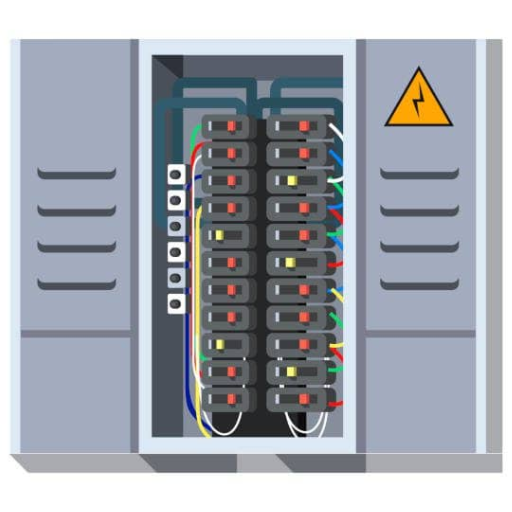
The 20-amp circuit enables safe operation of 2400 watts according to the standard formula which calculates power by multiplying amps and volts with 120-volt household voltage as a base. To stop circuit overloads the system needs to operate at 80 percent of its total capacity which produces 1920 watts as its maximum power output. Equipment receives protection from excessive demands through safety buffer systems which prevent breaker interruptions. The established limit must be understood before connecting devices or installing new electronic equipment.
Importance of Knowing Wattage
Your electrical system’s safety and operational performance exist as two outcomes which depend on your knowledge of its wattage needs. The following five points demonstrate the importance of understanding wattage specifications.
Prevent Overloading Circuits
A user who exceeds a circuit’s wattage limit will cause two dangerous results which lead to circuit breakage and wire destruction and electrical fires. Users who stay below the 20-amp circuit maximum capacity can safely operate 1,920 watts because the system maintains an 80 percent usage limit.
Protect Electrical Appliances
Devices that run on overloaded circuits face the danger of overheating which results in permanent hardware destruction. The wattage information enables operators to maintain safe electrical conditions for their devices.
Ensure Energy Efficiency
Homeowners need to calculate their wattage requirements because this information helps them manage their power consumption which results in lower energy costs and electric expenses.
Support Proper Circuit Design
People need to understand wattage information because it helps them determine whether their current circuits can support new equipment or upcoming electronic upgrades.
Comply with Electrical Codes
The regulatory codes that govern residential and commercial electrical systems mandate specific wattage limits which organizations must follow to ensure both safety and operational performance. Most code violations occur because inspectors discover operators do not understand wattage requirements.
Core Technical Explanation
Wattage which people express in watts (W) serves as a power measurement which shows the speed at which devices consume or produce electrical energy. The measurement of watts becomes possible through the equation W = V × A which uses voltage (V) to show electrical potential difference and current (A) to show the movement of electric charge. The formula for alternating current (AC) circuits in residential and commercial systems includes power factor (PF) because all systems do not function at complete efficiency.
Understanding Wattage in Real Applications
🏠 Household Appliances Energy Consumption
Different appliances create different power requirements which result in producing different energy usage levels and generating different electricity costs. A typical microwave oven consumes power between 1,000 to 1,200 watts and an average refrigerator requires power between 150 to 250 watts to operate. Air conditioners and water heaters operate at power levels that exceed 2,000 watts. The selection process for energy efficient appliances needs this information because it helps to choose products which will reduce operational costs.
☀️ Renewable Energy Systems
Households need to track their solar panel systems power generation because it acts as their mandatory requirement for system maintenance. A standard solar panel produces between 250 and 400 watts when operating under ideal conditions. Multiple solar panels generate enough electricity to power a house which requires both batteries and inverters to handle the total power requirements.
⚠️ Circuit Overloading Risks
Modern regulations require systems to stop circuits from experiencing overload conditions. The National Electrical Code (NEC) regulations used in the United States state that circuits must operate under 80 percent of their maximum designed capacity to avoid dangerous overheating conditions. A 15-amp circuit at 120 volts can handle a maximum power load of 1,800 watts but actual operational limits should not exceed 1,440 watts.
💡 Energy Efficiency Standards
Energy Star ratings and modern energy efficiency metrics help consumers to decrease their electricity usage. LED light bulbs use between 9 to 12 watts of power which is much lower than the 60 watts needed by traditional incandescent bulbs while delivering the same level of brightness.
📊 Latest Insights (October 2023)
The International Energy Agency (IEA) reported that global electricity consumption increased by 2% during 2023 because electric vehicle (EV) adoption grew and manufacturing plants switched to electric power. The charging stations for electric vehicles operate at 7.2 kW using Level 2 chargers while DC fast chargers reach maximum output of 150 kW which creates a need for effective wattage control systems.
Smart devices use wattage management systems to achieve energy efficiency. The widespread use of Internet of Things (IoT) devices has transformed how individuals use energy. Users can track their real-time wattage consumption through smart plugs and meters which allows them to select their device operation schedule for off-peak periods that will help them save energy.
The combination of basic principles with current developments shows that people need to know how wattage works because it affects both their daily life and their ability to control energy systems.
The Formula: Amps × Volts = Watts
The formula for calculating electrical power, represented as Watts (W), shows the connection between current (Amps, A) and voltage (Volts, V). According to this relationship power equals current times voltage which is demonstrated by the following equation:
Watts (W) = Amps (A) × Volts (V)
Example: 5 Amps × 120 Volts = 600 Watts
The basic equation serves as the foundation for multiple real world applications which help control energy usage in industrial settings. The power consumption of a 120 volt device which uses 5 amps can be determined through the following calculation:
Main Data Elements and Important Factors
Comparison Between Residential Systems and Commercial Systems
US residential circuits usually function at either 120V or 240V according to standard practices. High-energy appliances which include dryers and ovens need 240V power because it allows them to operate with reduced current draw which decreases heat production. Commercial and industrial environments usually use 480V systems because these systems can meet their higher power requirements in an effective way.
Companies which run their operations through IoT system power monitoring devices receive accurate real-time energy consumption data through smart energy meters according to the latest research results. The devices analyze power use through the Watts formula which lets users identify their highest energy consuming appliances.
Modern refrigerators operate at approximately 1.5 amps when connected to a 120V circuit which leads to continuous power consumption around 180W.
Current Device Usage Patterns Show The Following Trends:
The worldwide average running power of electronic devices together with IoT systems reached 30W for each device during the year 2023. The system achieves energy optimization through its capacity to assess and track the wattage of each individual device throughout the complete operational network.
Efficiency Implications:
The Watts formula helps users discover electrical system inefficiencies while they develop energy-efficient solutions. Users can decrease their energy expenses through replacing outdated appliances which consume excessive amperage while still maintaining their appliance performance. The formula functions as the fundamental principle which renewable energy systems use to determine solar panel output because a 300W panel at 20V produces 15A of current. The study of technical concepts shows that basic electrical knowledge together with modern technologies needs to be mastered for effective energy control and distribution.
Understanding the 80% Rule for Continuous Loads
NEC Article 210.19(A)(1)
20A × 0.8 = 16A Maximum Continuous Load
Continuous loads operating 3+ hours must not exceed 80% of circuit capacity
NEC 80% rule establishes essential safety standards to protect electrical circuits from overheating while maintaining safe operational conditions. The NEC Article 210.19(A)(1) establishes that continuous loads which need to operate for three hours or more should use only 80% of a circuit’s maximum power capacity. The system maintains operational safety through this restriction which protects against temperature increases and variations in user requirements.
The example illustrates a circuit that can handle 20 amperes. The 80% rule establishes that a circuit can sustain 16 amperes as its highest load for extended operation 20A × 0.8 = 16A. The measure protects against wire overheating which would trigger breakers and damage any connected devices. The principle applies to lighting systems and HVAC units and any other devices that need to run for long periods.
The 80% rule becomes more important due to modern smart home technology which has progressed into the current period. Residential solar inverter systems use this standard to measure continuous AC output which helps them maintain power during high-energy production periods. Data-driven energy management systems enable continuous load percentage monitoring while delivering real-time analysis to verify rule compliance.
The implementation of the 80% rule in electrical designs results in increased safety and operational efficiency for both residential and commercial systems which enables them to function properly throughout extended time periods.
Calculating Load for 20 Amp Circuits
The National Electrical Code (NEC) requires circuits to operate at 80% capacity for continuous electrical loads. The 20-amp circuit allows 16 amps as its maximum continuous load because 20 amps times 0.8 equals 16 amps. The established threshold determines the safe operating range which enables the circuit to function without experiencing overheating problems or circuit breaker shutdowns.
The following operational scenarios and their corresponding data will test practical applications.
- 💡
Lighting Fixtures: Each recessed LED light on this circuit consumes 10 watts of power according to the circuit design. The 120-volt system makes each light consume 0.083 amps because 10 watts divides by 120 volts. A 20-amp circuit operating at 80% capacity could thus support up to 192 LED lights (16 amps ÷ 0.083 amps per light).
- 🔌
Appliances: High-draw appliances like microwaves (1,200 watts) or hairdryers (1,500 watts) consume around 10 and 12.5 amps, respectively. The simultaneous operation of these two devices on a 20-amp circuit causes a potential overload because the combined current draw exceeds the 16-amp maximum safety limit for this circuit system.
- 🏠
Outlets in Residential Use: NEC guidelines estimate that each duplex receptacle will draw 1.5 amps of current. A 20-amp circuit can, therefore, support approximately 10 duplex receptacles, assuming a total connected load of 80%.
- ⏱️
Continuous Loads: For devices that run continuously (defined by NEC as operating over three hours), such as a refrigerator rated at 4 amps or HVAC components drawing 8 amps, the total standby load must not surpass the 16-amp threshold for safety compliance.
The process of planning load distribution together with calculation methods enables circuits to operate at their maximum safe capacity while creating a fire hazard protection system that extends equipment operational life. Always consult an electrical professional or more specific NEC guidelines when modifying circuit designs for diverse applications.
Practical Examples
📈 Supporting Data
The latest energy consumption research results demonstrate that energy load management has become more challenging to handle. The U. S. Energy Information Administration (EIA) reported that suburban residential electricity consumption increased by 15% each year because of electric vehicle chargers. The study demonstrates that detailed load calculations should be used to study energy demand changes throughout time. Energy-efficient HVAC system upgrades require higher energy usage during system installation but lead to reduced energy consumption throughout their operational life which creates a need for continuous load management during the installation process. The results from the examples and data demonstrate that complete load calculations together with new operational methods create secure and compliant electrical systems which can operate safely in residential and commercial settings.
Common Household Appliances on a 20 Amp Circuit
The 20 amp residential circuit can handle large electrical loads but requires proper knowledge about household devices to maintain safe operations and optimal performance. The 20 amp circuit can handle 2400 watts because its 20 amp capacity combines with the standard home voltage of 120 volts. The best practices of the industry determine that circuits should have their maximum load ceiling set at 80 percent which allows handling of sudden power spikes that produce 1920 watts of electrical output.
The power usage of typical household devices on a 20 amp circuit:
The kitchen and laundry areas contain numerous high-wattage appliances which create an increased risk of a 20 amp circuit becoming overloaded because of their diverse power needs. The combined load should remain under rated capacity because load balancing and the 80 percent rule work together to protect system safety. The future expansion of electrical systems will gain advantages when powerful equipment needs to be distributed across several circuits for better energy management. The calculation of loads and the creation of electrical designs should always be handled by a licensed electrician.
Industrial Applications and 20 Amp Breakers
The 20 amp breaker functions as a basic electrical component which most industrial facilities employ because it can safely manage heavy electrical loads. The breakers protect the system by preventing overloads which would cause equipment to malfunction. The following text presents a comprehensive inventory of five major industrial sectors which use 20 amp breakers as their standard breaker solution.
-
1Warehouse Lighting Systems
Warehouses use lighting systems that require 20 amp breakers to supply their electrical power needs. 20 amp breakers are used to handle the high wattage requirements of multiple high-intensity discharge (HID) lamps or LED fixtures without overloading circuits. -
2Industrial Power Tools and Equipment
The equipment needs 20 amp breakers because air compressors and drills and grinders require high power to function. The breakers deliver sufficient protection against overload conditions which result from equipment operation and repeated usage of tools. -
3HVAC Systems
Industrial facilities need dedicated circuits with higher amperage for their heating and ventilation and air conditioning systems. 20 amp breakers are used to ensure reliable and consistent energy delivery to these critical systems, minimizing downtime. -
4Data Centers and Server Rooms
Modern industrial operations require businesses to build data centers and server rooms for their advanced computing infrastructure. The installation of dedicated 20 amp circuits enables efficient management of energy requirements for servers and network switches and cooling systems. -
5Conveyor Belts and Automated Machinery
Automated production lines that use conveyor belts and robotic systems need uninterrupted power supply together with circuit protection technology. Production activities maintain safe operations because 20 amp breakers provide system protection throughout their production activities.
The following industrial applications demonstrate how 20 amp breakers serve as essential equipment which provides industrial facilities with multiple operational functions. The implementation of these systems provides safe electrical power distribution for operational requirements while it decreases electricity waste through power distribution systems.
Understanding Wattage for Different Appliances
The wattage of an appliance determines the amount of electrical power it consumes during operation. The circuit design needs to be based on these requirements because it prevents circuits from getting overloaded. Below are examples of common appliances along with their typical wattage ranges.
- 🧊 Refrigerator
100 – 800 W - 📡 Microwave
800 – 1,200 W - 👕 Washing Machine
400 – 1,200 W - ❄️ Window Air Conditioner
500 – 1,500 W - 📺 LED Television
30 – 100 W - 📺 OLED Television (larger)
120 – 250 W
People use the wattage of these appliances to plan their electrical needs because the wattage shows them how much power their devices will use.
Safety and Compliance
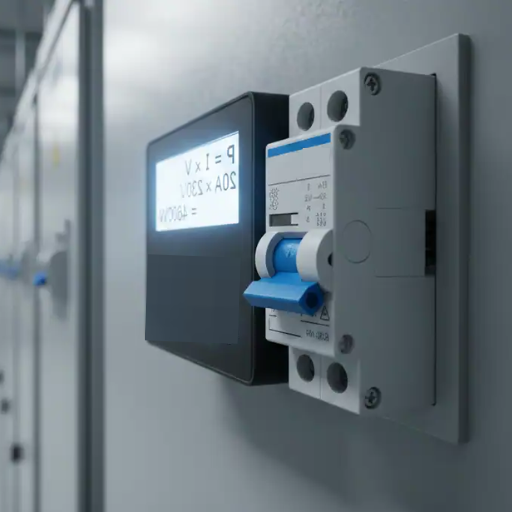
Electrical systems need safety and legal standards to be maintained through two essential requirements which involve following existing standards and utilizing proven industrial techniques that minimize accidents while maintaining operational system performance. The National Electrical Code (NEC) in the United States and similar regulatory bodies globally, such as the IEC (International Electrotechnical Commission), provide guidelines to mitigate risks associated with electrical installations and equipment usage.
The implementation of safety and compliance standards protects both life and property while enabling electrical systems to operate safely under current regulations. Homeowners and industry experts need to keep abreast of changing standards because they affect their ability to comply with regulations and their capacity to manage risks.
Circuit Breaker Ratings and Specifications
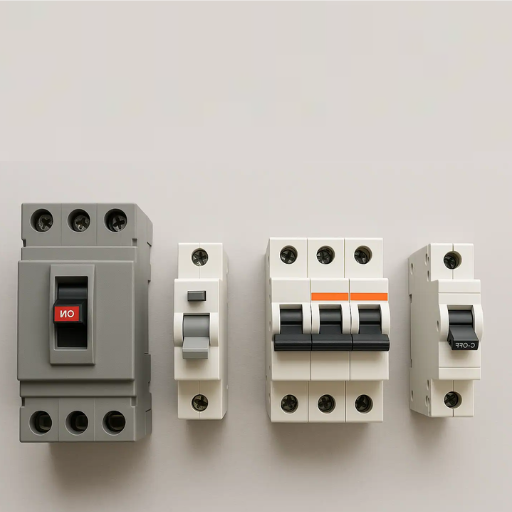
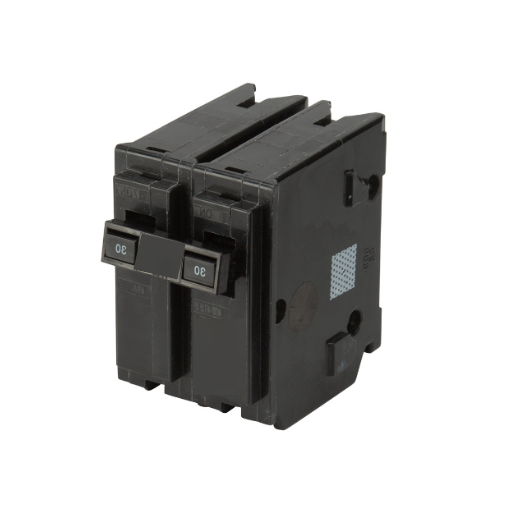
Circuit breakers serve as elements which protect electrical systems because they stop current flow to prevent damage from overloads and short circuits and system faults. The equipment usage needs proper selection process which requires people to learn equipment ratings and specifications. The international standards which include IEC 60947-2 and IEEE C37 and UL 489 establish the ratings which guarantee consistent performance across different applications. The next section presents the main ratings together with their system performance impacts which stem from those ratings.
Rated Voltage (Ue):
The rated operational voltage specifies the maximum voltage the circuit breaker can operate under normal conditions. The low-voltage circuit breakers support voltage ratings which extend to 1,000V AC while medium-voltage breakers function within the 1kV to 72.5kV interval.
Rated Current (In):
The rated current represents the highest continuous current capacity which a breaker can handle under particular environmental conditions without tripping. The industrial low-voltage applications commonly use this value which ranges from 1A to 6,300A because many devices offer adjustable settings to provide customized protection.
Short-Circuit Breaking Capacity (Icu/Ics):
The safety parameter establishes the highest fault current which the breaker can interrupt safely without causing equipment failure. The residential breakers have interrupting capacities which range from 6kA to 10kA while the industrial-scale units can handle interrupting capacities of up to 150kA at specific voltages.
Rated Frequency:
Circuit breakers operate at particular system frequencies which include 50Hz and 60Hz. Some advanced models are compatible with both frequencies for global applications and harmonized operations.
Mechanically and Electrically Operated Lifespan:
The device functions according to its mechanical strength which defines its maximum operational capacity through the total number of times it can complete opening and closing movements until it ultimately breaks down. The average industrial equipment needs to operate for more than 10,000 times before reaching its complete mechanical failure point. The electric durability of a system operates at reduced capacity because it only requires electric power during fault interruption periods.
Tripping Curve and Response Time:
The circuit breaker time-current characteristics are defined through tripping curves which display the breaker trip point based on various fault current levels for low-voltage systems using B, C, and D types. The “C” curve breakers work effectively in applications that experience moderate inrush currents which occur during inductive load operations.
Temperature Rating:
Breaker specifications include performance across temperature ranges which serve as critical measurements for extreme operational conditions. Modern systems use thermal-magnetic technologies to detect both current and temperature levels.
Arc Energy Management:
The latest circuit breakers follow modern techniques which reduce arc flash events through their operational design. Industrial environments that handle high-power operations use high-end devices which employ internal systems for arc-quenching to ensure protection of both personnel and equipment.
The combination of these ratings with specific context requirements enables users to achieve efficient electrical system performance while meeting safety standards through proper selection of installation environment and load type and operational requirements. The manufacturers Schneider Electric, Siemens, ABB, and Eaton supply specification sheets which contain complete parameter details and performance information for accurate product selection.
Wire Gauge Recommendations for 20 Amp Circuits
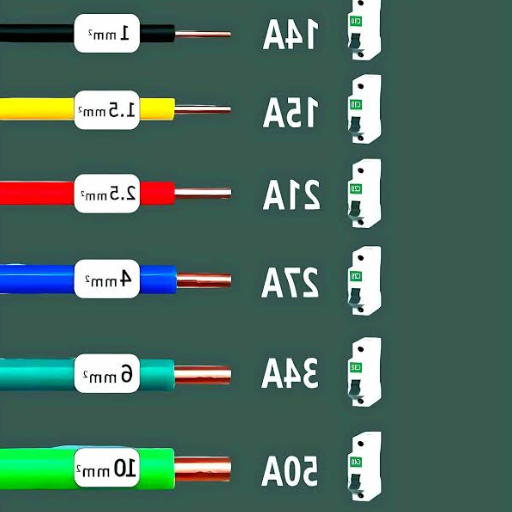
The correct wire gauge selection for a 20-amp circuit establishes vital foundations which support safe electrical system operation. The recommended wire size is generally 12 AWG (American Wire Gauge) for most applications. The National Electrical Code (NEC) requires this gauge to deliver sufficient current capacity while reducing voltage loss and meeting circuit requirements because its actual performance matches established safety standards. The voltage drop from extended wire runs needs assessment because it can lead to equipment performance degradation and electrical component overheating. For wire lengths exceeding 50 feet, it may be advisable to use 10 AWG to compensate for the increased resistance over distance. The NEC guidelines require that voltage drop should stay under 3% because this percentage serves as the ideal performance standard for electrical systems.
The installation process requires high-quality copper wires because copper provides better conductivity and lower resistance than aluminum. The calculations require you to consider ambient temperature and conduit fill together with any additional derating needs because these factors determine the correct wire gauge. The final step requires you to check NEC guidelines together with local building codes for all necessary compliance requirements.
National Electrical Code (NEC) Considerations
The National Electrical Code (NEC) serves as essential guidance which designers and builders of electrical systems need to follow in order to achieve safety and operational dependability and to meet regulatory standards. The NEC establishes five essential requirements which must be followed:
-
Art. 310.15Conductor Ampacity Ratings
Conductors must receive proper sizing according to their maximum ampacity which depends on their operating temperature and insulation type and environmental factors. The system requires maintenance of operational temperatures which must stay below designated thresholds to prevent dangerous overheating situations that could lead to fires. -
Art. 250Grounding and Bonding
Shock hazards require proper grounding and bonding procedures which help maintain safe voltage levels. The system requires all non-electrically conductive metallic parts to be bonded with the grounding system. -
Art. 240Overcurrent Protection Requirements
The system requires circuit breakers or fuses which must be properly sized to protect conductors from excessive current that could cause overheating which results in safety hazards. The process requires load evaluation which needs protective device selection to match conductor capacity. -
Art. 110.26Installation of Electrical Panels
The electrical panels require working spaces with specific clearance requirements which enable safe maintenance and operational activities. The standard requires equipment operating at 600V or lower to maintain a minimum of 3 feet of clear space in front of it. -
Art. 220Branch Circuit Load Calculations
Load calculations for branch circuits must be conducted to ensure circuits can handle the anticipated load without undue stress on the system. This method needs both continuous and non-continuous loads to be calculated according to NEC standards.
The planning and installation phase needs thorough examination of all essential factors which will result in an electrical system that operates correctly and meets safety regulations. Always reference the most current edition of the NEC for detailed requirements.
Frequently Asked Questions (FAQ)
📚 References
- •
Massachusetts College of Art and Design – Watt to Amps Calculator: Provides a basic formula for calculating watts and amps, which is essential for understanding circuit capacity. - •South Dakota State University – Modernizing Your Wiring System: Discusses maximum wattage for 20-amp circuits and provides practical guidelines for safe electrical usage.
- •
Erie Institute of Technology – Ohm’s Law and Electrical Projects : Explains safe wattage limits for 20-amp circuits and the importance of proper electrical load management.
⚠️ Safety Disclaimer: The information in this article is for educational purposes only. Always consult a licensed electrician before making changes to your electrical system. Compliance with local codes and the most current edition of the NEC is required for all electrical work.